When planning a home lift, one of the first decisions homeowners face is choosing between a passenger lift and a platform lift.
At first glance, both serve the same purpose - moving people safely and conveniently between floors. However, there are important differences in their design, speed, spacial requirements and safety standards.
Whether you're building a new landed property in Singapore or considering a lift for an existing home, understanding these differences can help you make a more informed decision.
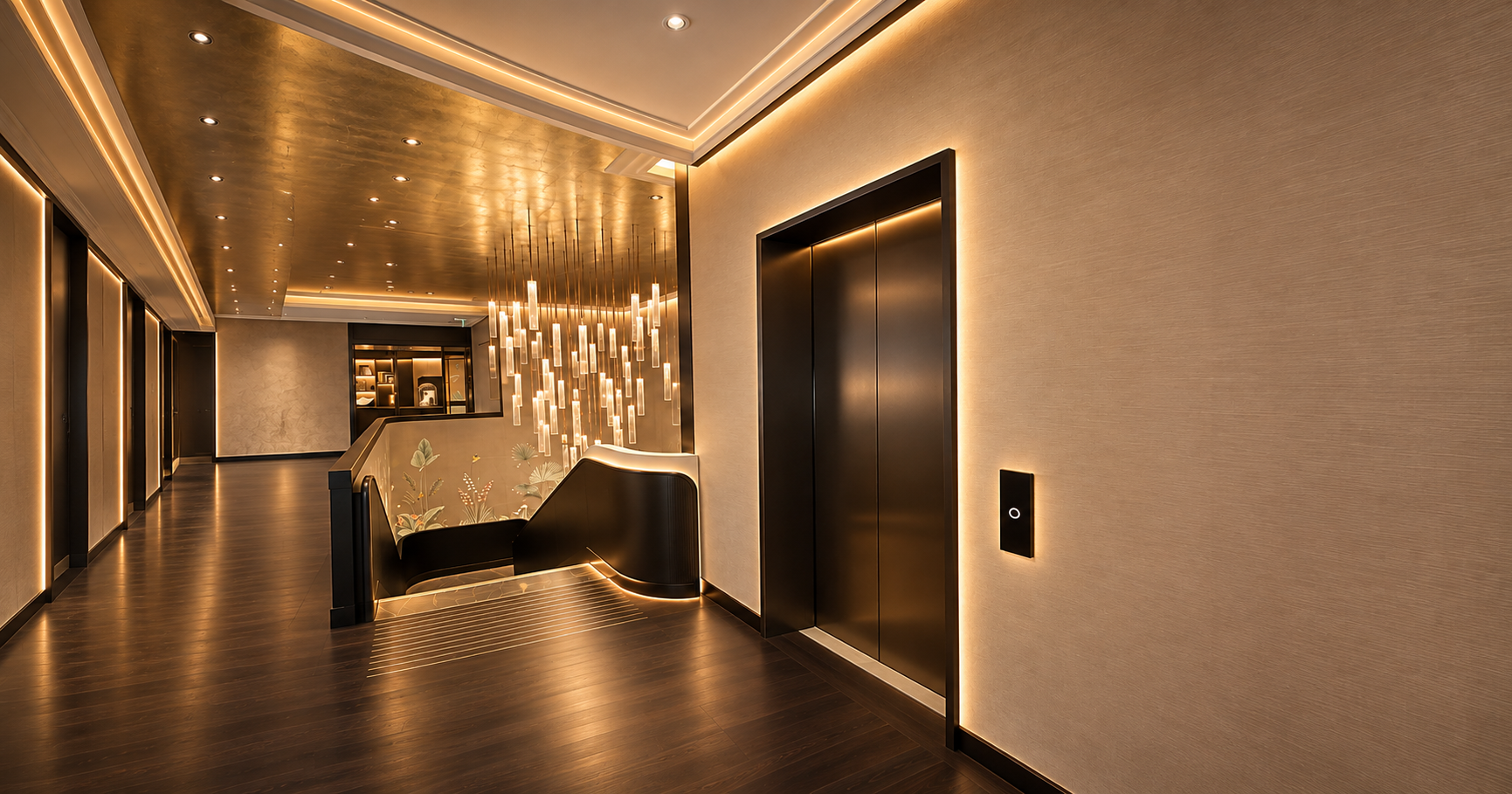
A passenger lift is the type of lift most of us are familiar with in commercial buildings, condominiums, public housing (HDB), and shopping malls.
It typically features a fully enclosed cabin, automatic sliding doors and a higher travelling speed, making it suitable for buildings with multiple floors or where frequent usage is expected
Passenger lifts can also be installed in private landed homes, including terraces, semi-etached houses, detached bungalows and Good Class Bungalows (GCBs).
In Singapore, conventional passenger lifts are generally designed in accordance with SS 550, the Singapore Standard covering the installation, operation and maintenance of electric passenger and goods lifts.
While passenger lifts offer convenience and a familiar travelling experience, they generally require more generous pit depth and headroom provisions, which should be considered early during building design.
Platform lifts are primarily designed to provide vertical access for people with reduced mobility, including wheelchair users.
Unlike conventional passenger lifts, platform lifts typically operate at a slower speed - 0.15m/s. One of their advantages is the flexibility they can offer in properties with limited space.
Certain platform lift designs have reduced pit and headroom requirements, making them worth considering when retrofitting a lift in an existing landed house, such as an inter-terrace or semi-detached property.
Platform lifts are generally designed with reference to EN 81-41, the European safety standard for vertical lifting platforms intended for people with impaired mobility. BCA's Approved Document includes EN 81-41:2024 among the applicable standards.
However, not all platform lifts are identical. Some feature open or partially enclosed platforms, while others come with more enclosed designs and different door configurations.
In recent years, another option has become increasingly popular for Singapore landed homes — the hybrid lift.
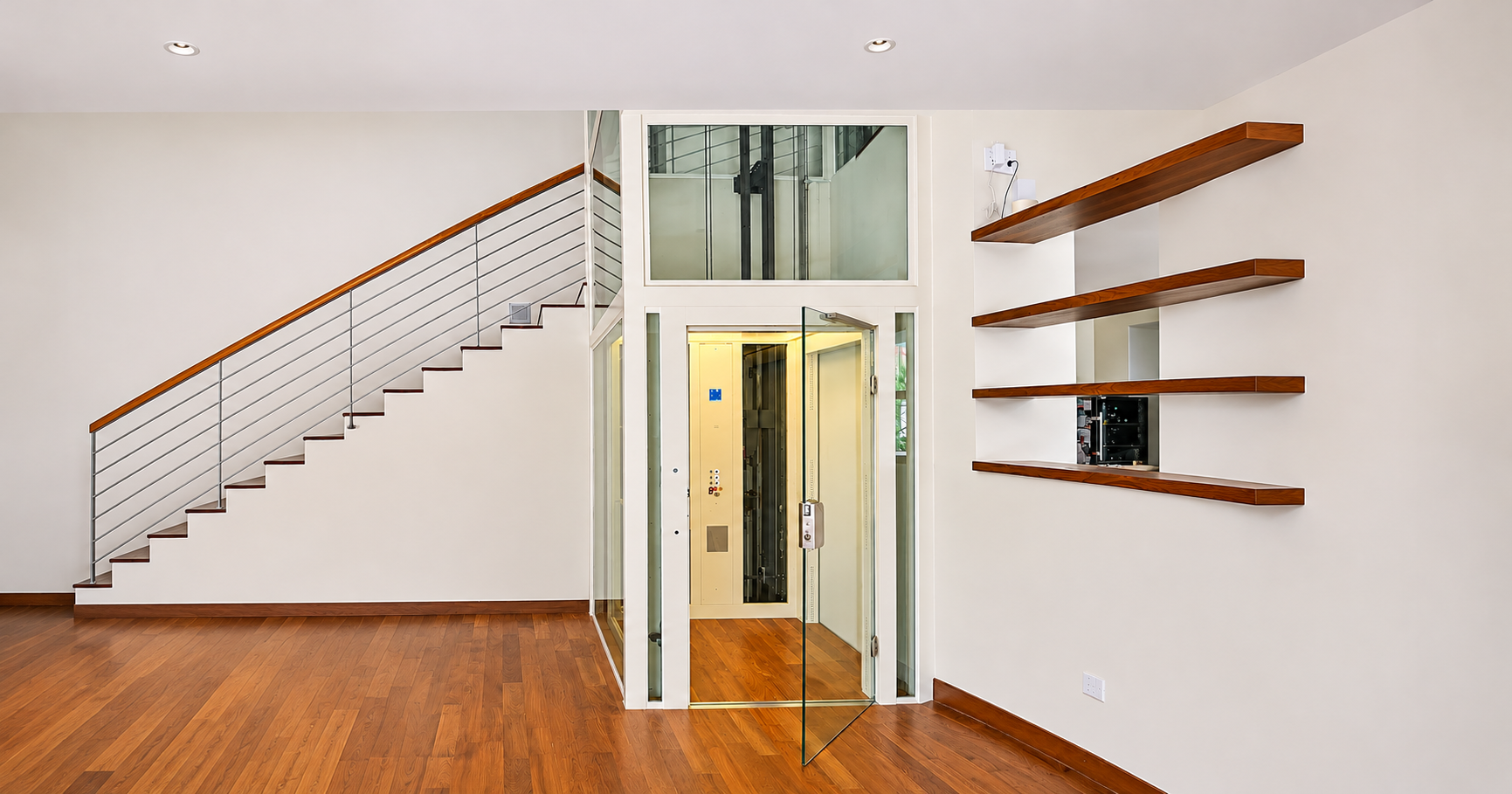
This term is commonly used to describe certain vertical platform lifts that feature a fully enclosed cabin and automatic sliding doors, providing an experience similar to that of a conventional passenger lift.
These lifts can be particularly appealing to homeowners looking for a modern design with relatively compact space requirements.
However, because these configurations are not fully covered by the conventional SS 550 or EN 81-41 requirements alone, Singapore's Building and Construction Authority (BCA) has introduced a specific Code of Practice (COP) for Vertical Platform Lifts with Enclosed Platforms and Automatic Sliding Doors.
This COP addresses additional safety considerations, including emergency communication, ventilation, door protection and safe access for maintenance.
Hybrid lifts covered by this COP have a maximum rated speed of 0.15m/s.
At Meyer Lift, we take pride in championing the introduction of hybrid vertical platform lifts in Singapore focusing on the fact that we believe platform lifts with enclosed cabin and doors are safer for the end user.
During the early adoption of these systems, we navigated significant technical and regulatory challenges, working closely with the Building and Construction Authority (BCA), lift specialist Professional Engineers and international manufacturers.
Through extensive research, development and continuous refinement, we successfully developed a premium lift solution designed to meet BCA's stringent safety and regulatory requirements while addressing the evolving needs and expectations of our clients.
Our commitment to innovation, safety and quality has allowed us to push the boundaries of conventional lift solutions, delivering products that combine reliable performance, modern aesthetics and greater design flexibility without compromising on safety.
Passenger lifts generally travel faster and may be more suitable for properties with greater travel heights or heavier usage.
Platform lifts and hybrid lifts operate at lower speeds but can still provide a convenient means of travelling between floors in a landed home.
Space is another important consideration.
Conventional passenger lifts generally require greater pit depth and overhead clearance, while certain platform lift and hybrid lift systems can offer reduced requirements.
However, the actual dimensions depend on the selected equipment and applicable safety provisions. A site assessment is always recommended before deciding on a particular solution.
In Singapore, the relevant technical standards depend on the lift's actual design and classification.
SS 550: Generally applies to conventional electric passenger and goods lifts.
EN 81-41: Addresses vertical platform lifts intended for people with impaired mobility.
BCA COP for Enclosed Vertical Platform Lifts: Addresses additional safety requirements for hybrid-style lifts with enclosed platforms and automatic sliding doors.
All three approaches must be assessed against the applicable BCA requirements. Home owners should also engage appropriately registered lift contractors and ensure that the necessary inspections and Permit to Operate (PTO) requirements are satisfied.
Where structural modifications or Additions & Alterations (A&A) works are involved, your architect or Qualified Person (QP) should advise on any relevant BCA, URA and Professional Engineer (PE) submissions.
There isn't a single lift solution that works best for every home.
For a newly constructed bungalow with sufficient space, a conventional passenger lift may be a suitable choice.
For an existing terrace house where structural modifications are more challenging, a compact platform lift or hybrid lift may be worth exploring.
Beyond the space available, consider how frequently the lift will be used, whether wheelchair access is required, your preferred design and the long-term maintenance arrangements.
The best choice is one that balances everyday convenience, practical site requirements and safety.
Whether it's a passenger lift, platform lift or hybrid lift, each offers its own advantages.
Understanding the differences early can help homeowners avoid unnecessary complications and make better decisions when planning their property.
At Meyer Lift, we work closely with homeowners, architects and builders to explore
customized lift solutions suited to different architectural layouts, site constraints and
lifestyle needs.
Not sure which lift is suitable for your home?
Get in touch with our team to discuss your project and explore the available options.
Meyer Lift
Customised Lift Solutions for Your Home
https://meyer.com.sg